

Positions
Positions catalogues the SACCO's rate-sensitive assets and liabilities with their balances, rates, repricing dates and maturity buckets. It is the source data from which gap, NSFR and stress analyses are built. Pivot and graph views let the treasurer slice the balance sheet by product, rate type, currency or bucket.
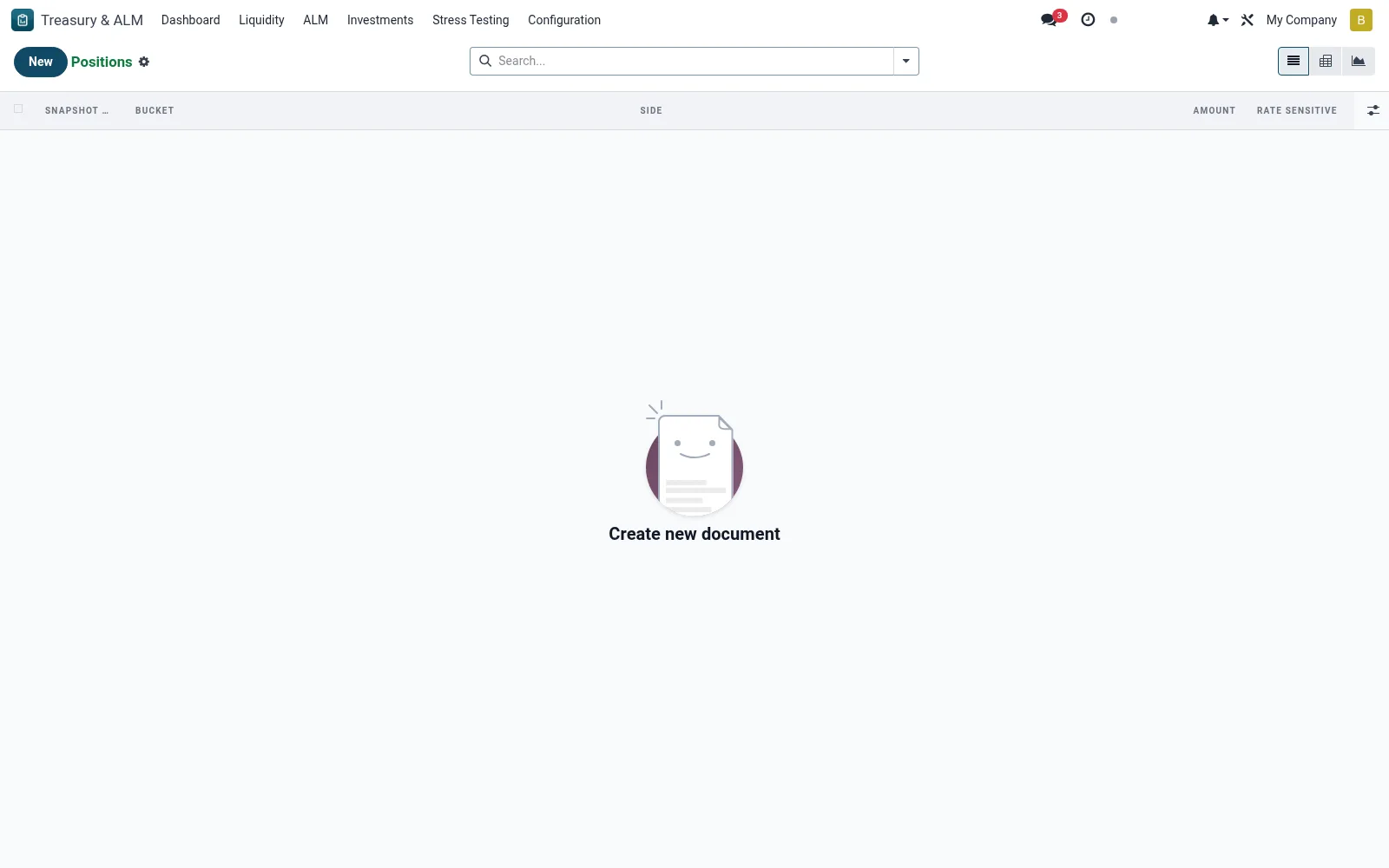
Workflow
- Open Treasury & ALM then ALM then Positions.
- Review or import the rate-sensitive asset and liability balances.
- Confirm each position's rate, repricing date and maturity bucket.
- Use the pivot to analyse the book by product, currency or bucket.
- Keep positions current so downstream gap and stress reports stay accurate.
Fields reference
Every field on this screen, drawn from the live data model.
| Field | Type | Required | Description |
|---|---|---|---|
Amount Baseamount_base | Money | — | Amount converted to base/reporting currency |
Rate Sensitiverate_sensitive | Yes/No | — | Counts in repricing gap |
Snapshot Datesnapshot_date | Date | Yes | Snapshot Date |
Bucketbucket_id | Link → treasury.bucket | Yes | Bucket |
Sideside | Choice: Asset, Liability, Equity | Yes | Side |
Amountamount | Money | Yes | Amount |
Has Messagehas_message | Yes/No | — | Has Message |
Namename | Text | — | Name |
Companycompany_id | Link → res.company | — | Company |
Currencycurrency_id | Link → res.currency | — | Currency |
Currencybase_currency_id | Link → res.currency | — | Currency |
Notesnotes | Long text | — | Notes |
Notes & rules
- Positions are the input dataset for gap, NSFR and stress computations.
- Each line carries a repricing date and a maturity bucket assignment.
- Fixed and floating rate types are distinguished for repricing analysis.
- Pivot and graph views support multi-dimensional balance-sheet slicing.
Was this page helpful?