

A payment consumes the reserve. It does not add to the loss.
Claims
Notification, exposures per coverage and claimant, case reserves split between indemnity and expense with every movement kept, payments, recoveries, subrogation and salvage. Paid plus outstanding less recoveries equals incurred at every point — which is what makes the loss ratio mean anything. Fraud indicators score the claim and a review band blocks settlement until a claims manager clears it; a payment is maker-checker, enforced on the server.
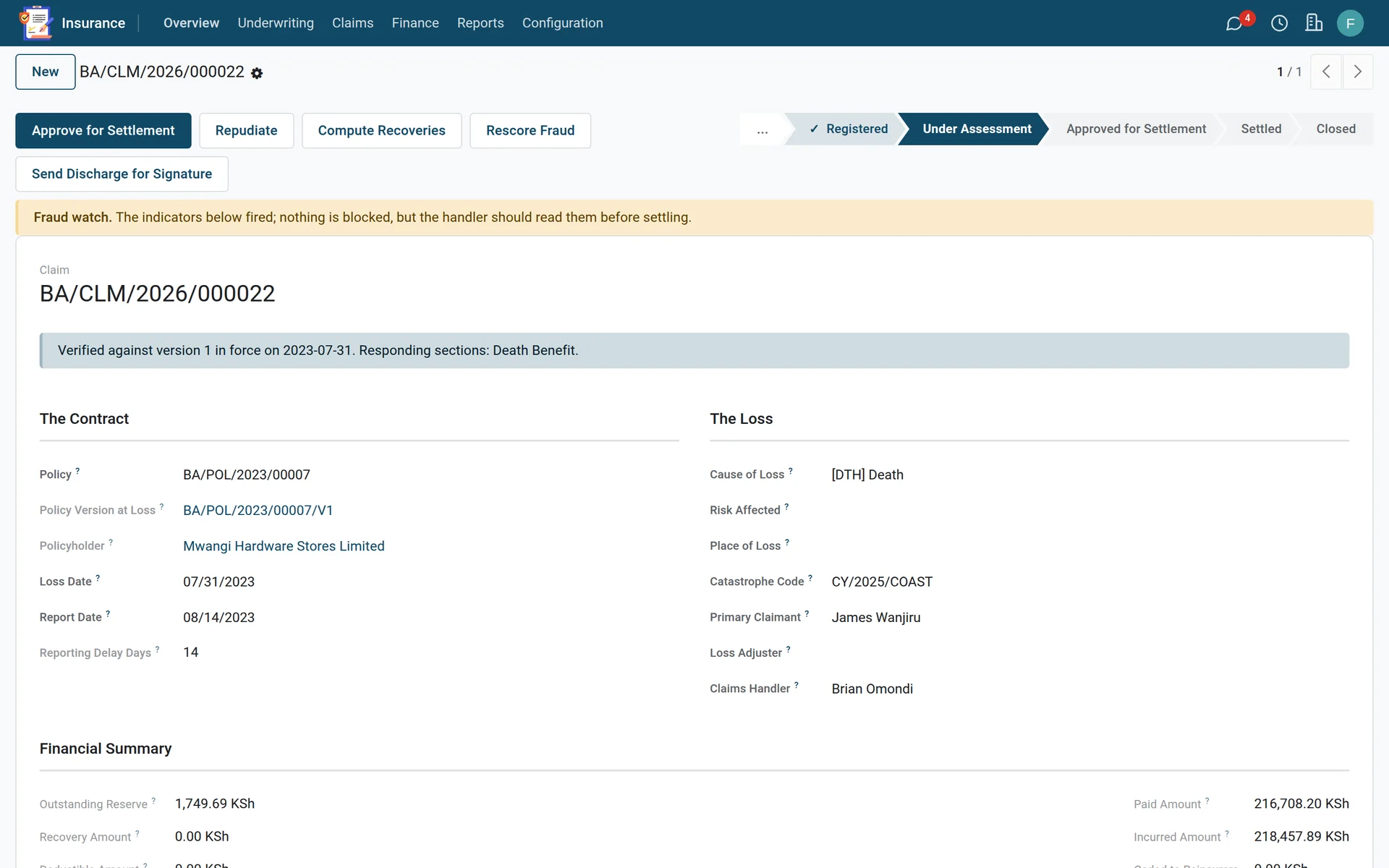
Reserves that cannot be typed over
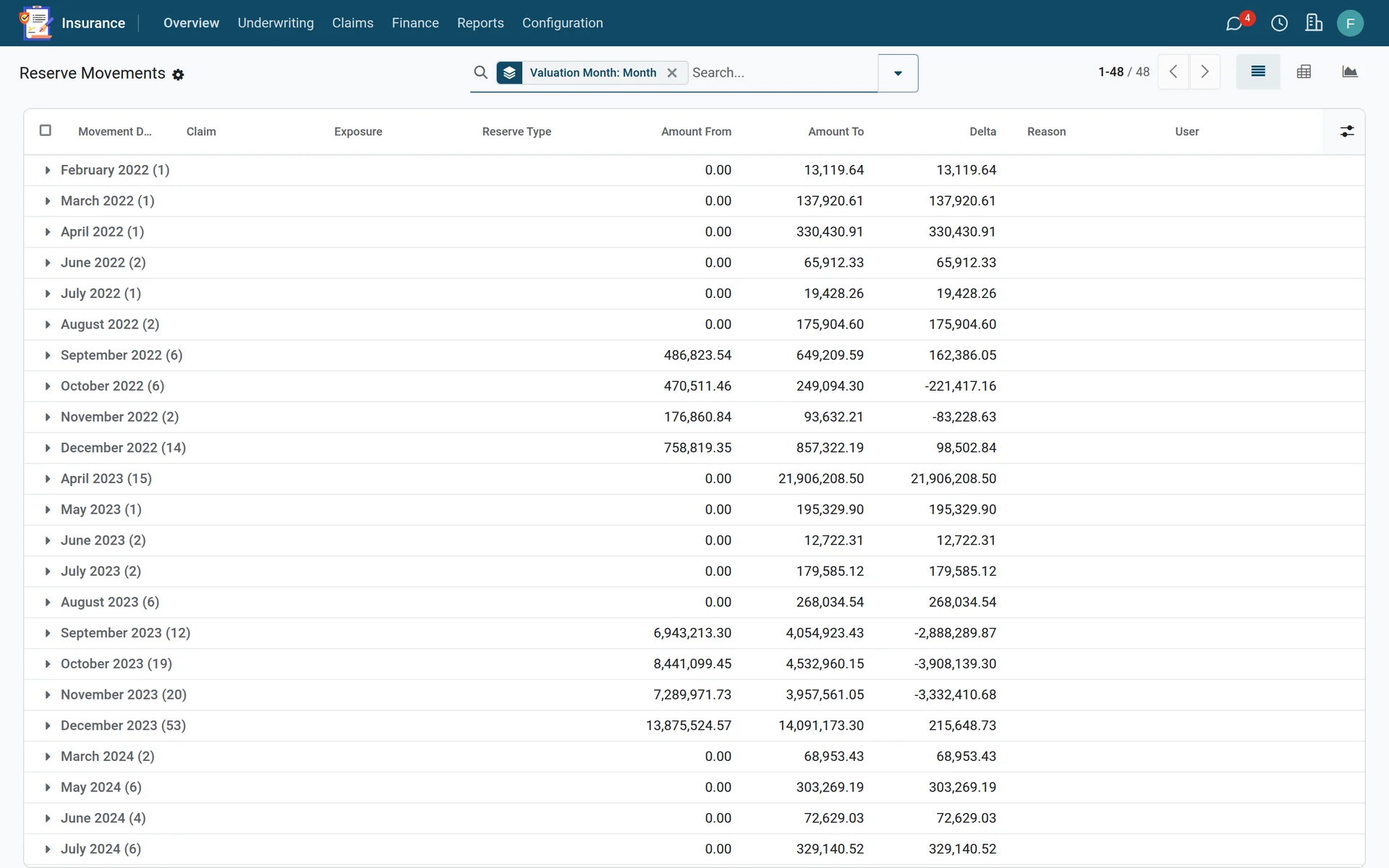
A reserve moves only by posting a movement, and a movement is never edited or deleted — because a triangle, a bordereau and an audit all read the history rather than the balance.
306 claim payments
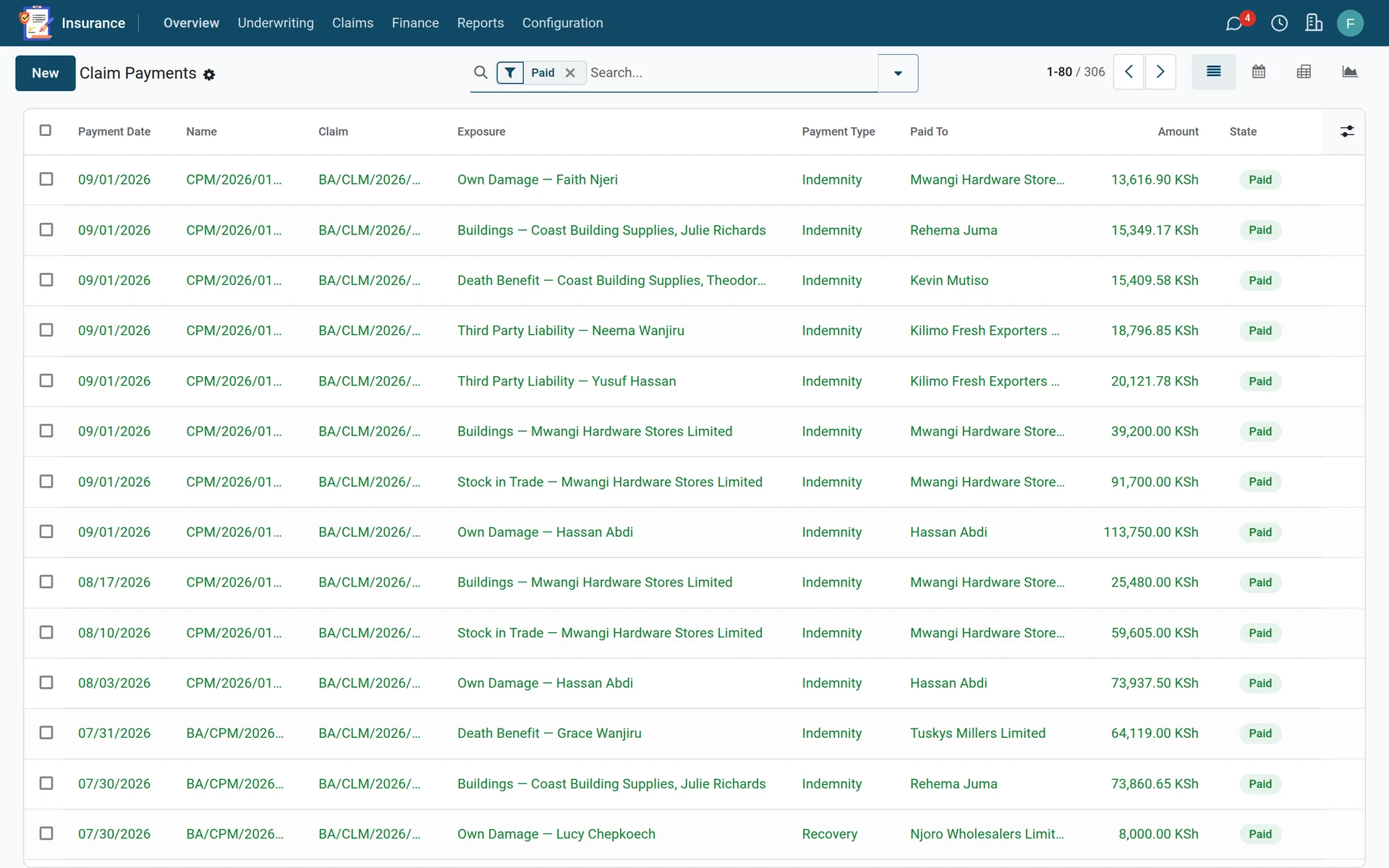
Every payment on every claim, indemnity and expense apart, each one consuming the outstanding reserve.
Reserve against paid, by exposure
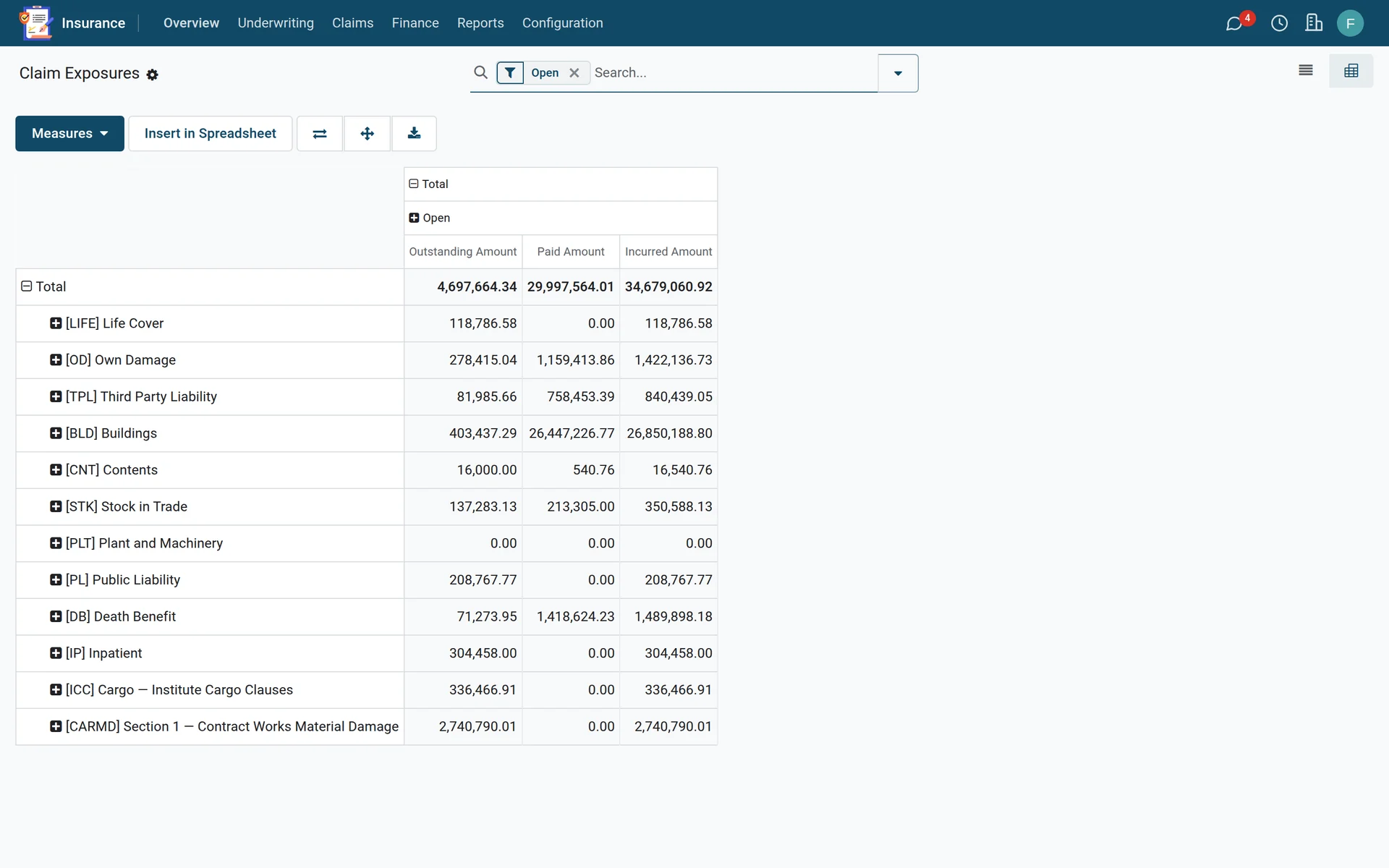
The level a reserve is actually held at, pivoted whichever way the conversation needs.
The claims register — 105 rows
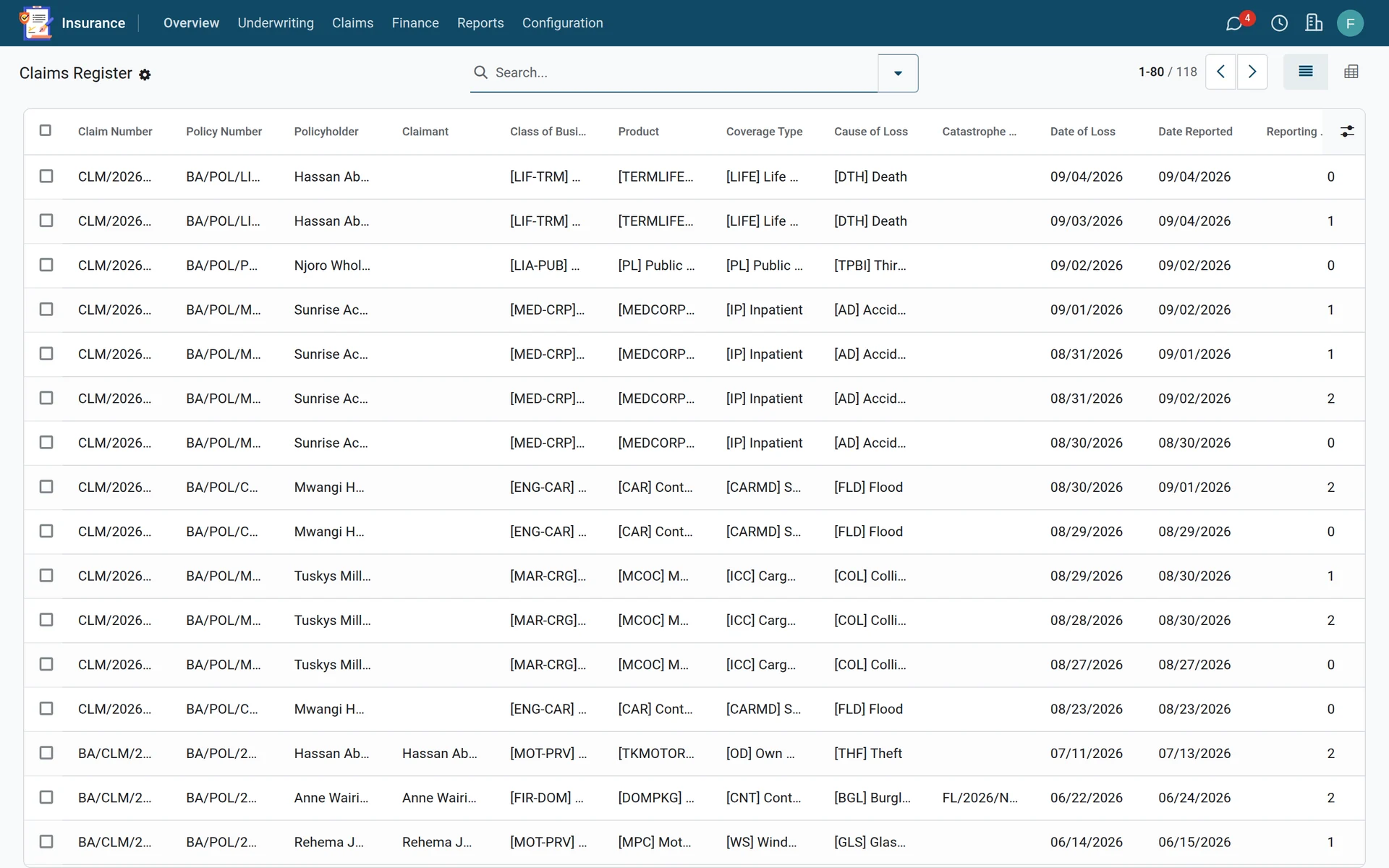
The extract a supervisor asks for, straight off the claim ledger.