

Industry attachment & placement
EduPrime manages the work-integrated learning cycle – maintaining employer relationships, placing students into attachments and internships, and capturing supervisor sign-off that the placement was completed satisfactorily.
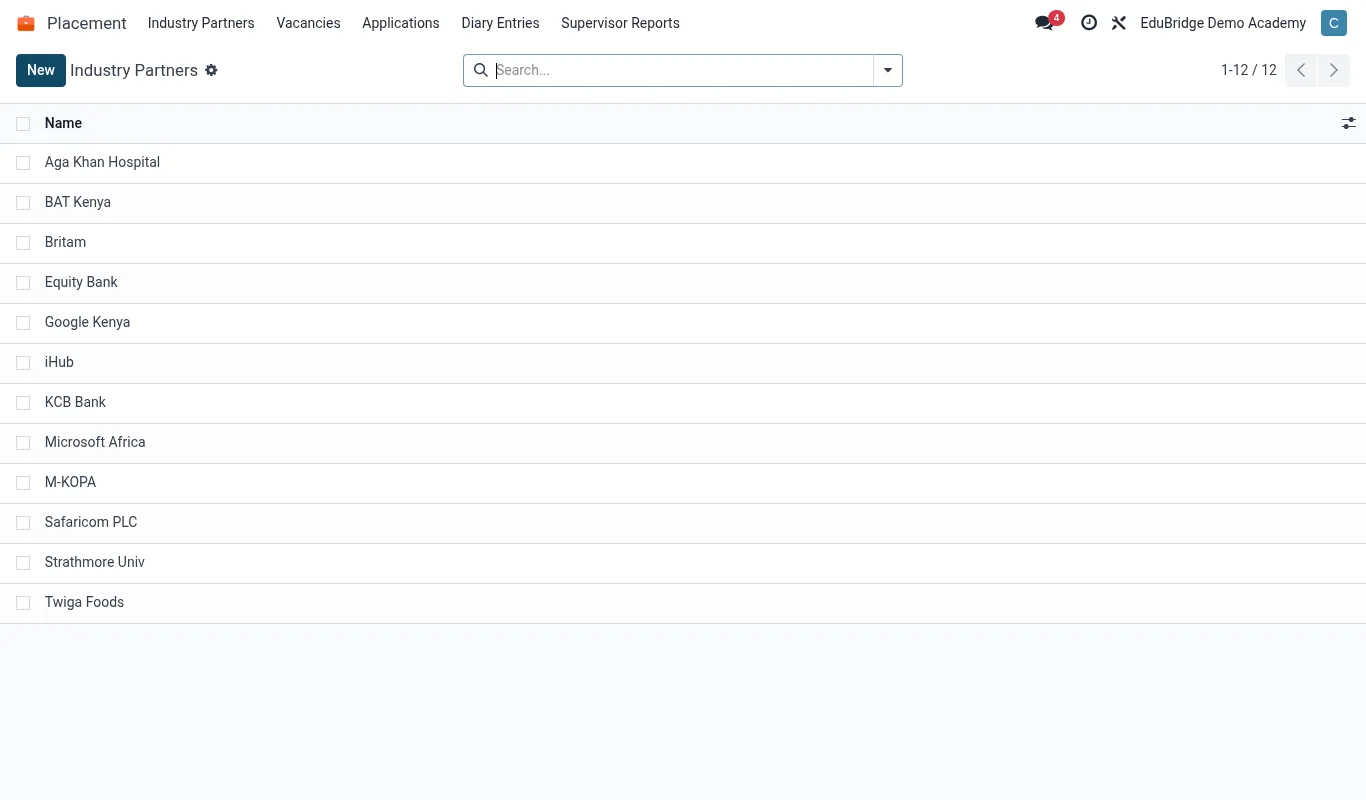
Employer records
Build a directory of host organisations under Placement → Employers. Each employer record holds the company details, the sectors and roles they offer, a contact person, the number of placement slots available per period, and a history of students they have hosted. A rating or feedback note helps the placement office steer students toward reliable hosts.
Attachments & internships
A placement links one student to one employer for a defined period. Whether it is a degree industrial attachment, a TVET workplace component, or a graduate internship, the flow is the same:
- Create the placement, selecting the student, the employer and the dates.
- Assign two supervisors – an academic supervisor from the institution and a host supervisor at the employer.
- Record the role, learning objectives and any logbook requirement.
- The student keeps a logbook / portfolio (weekly entries) through the portal during the placement.
- Mid-placement and end-of-placement assessments are recorded by each supervisor.
| Status | Meaning |
|---|---|
| Planned | Matched but not yet started |
| Active | Student currently on placement |
| Pending sign-off | Completed; awaiting supervisor assessment |
| Completed | Signed off and graded |
| Terminated | Ended early – reason recorded |
Supervisor sign-off
A placement is not complete until both supervisors sign off. The host supervisor confirms attendance, conduct and the skills demonstrated; the academic supervisor reviews the logbook and host report and awards the placement grade or competent/not-yet-competent verdict. Sign-off can be done through a secure supervisor portal link, so external host supervisors do not need a full system login.
Completed placements add to the student’s employability profile and the employer’s hosting history, and feed the institution’s graduate-outcomes reporting.