

Continuing & professional education
Continuing education runs short courses, workshops and CPD programmes for learners who are not enrolled in a full degree – with their own light-weight registration, attendance and certificate flow.
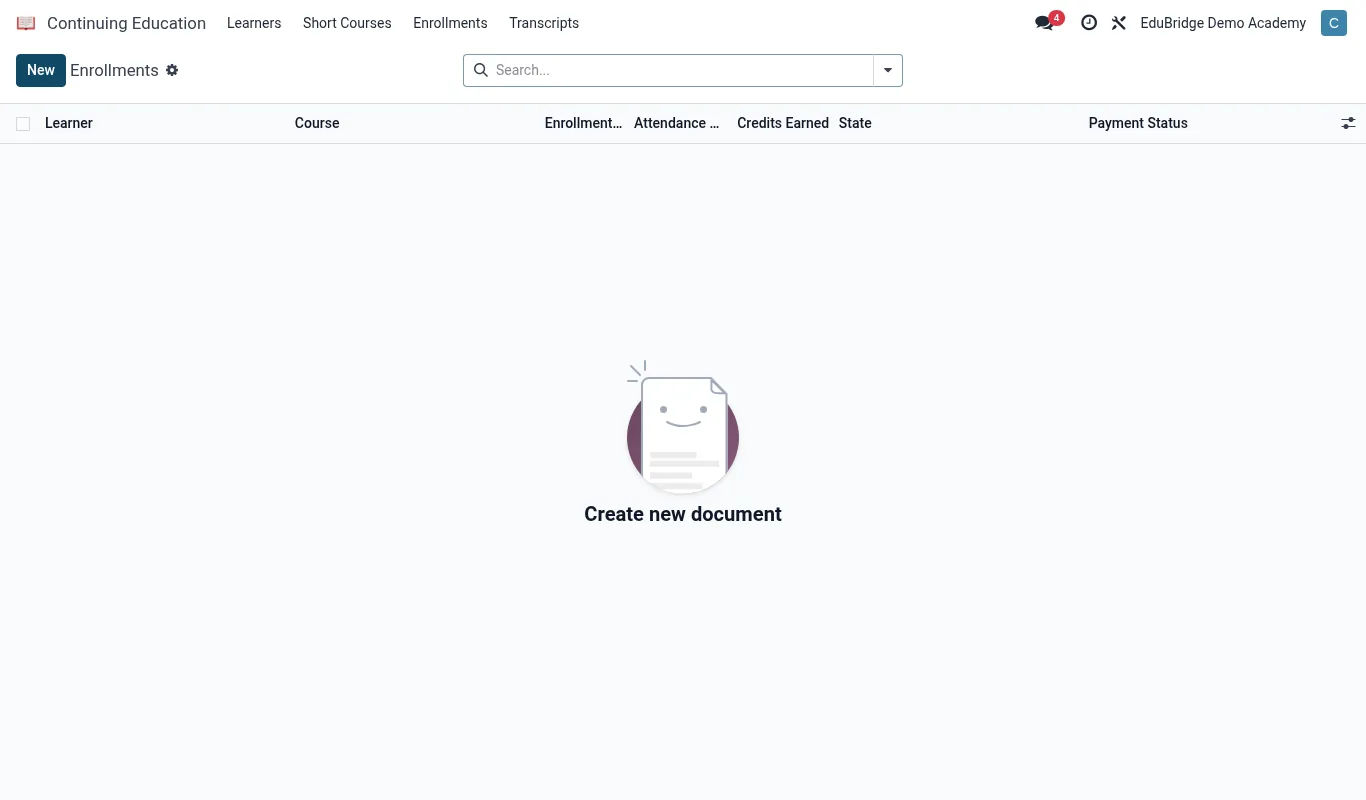
Short courses & learners
A short course is a stand-alone offering – a two-day Excel workshop, a six-week project-management certificate, a professional-development seminar. Unlike a degree course it does not carry programme credits; it is complete in itself. Create one under Continuing Education → Courses with:
- Title, schedule and venue – dates, sessions and location (or virtual link).
- Capacity – maximum learners, with a waitlist when full.
- Fee – a one-off charge, optionally with early-bird or group pricing.
- Facilitator – the trainer or instructor.
- Certificate template – what learners receive on completion.
Learners are people enrolled in short courses. A learner may be a member of the public, a corporate delegate, or an existing student picking up CPD. They get a person record (so contact details and history are kept) but are not admitted to a degree programme.
Enrolment & attendance
- Open the short course and click Enrol learner, or let learners self-register through the public website.
- EduPrime raises the course fee as an invoice; payment can be required before the seat is confirmed.
- During delivery, mark attendance per session. Many certificates require a minimum attendance percentage.
- Record a completion status – completed, attended, or did not complete – and a result where the course is assessed.
Certificates
On completion, issue certificates in bulk from the course record. EduPrime merges each learner’s name, course title, dates and a unique verification code into the certificate template and produces a PDF per learner. The verification code resolves to a public page so an employer can confirm the certificate is genuine.
Issued certificates are stored against the learner’s record, so a returning learner builds a verifiable CPD history over time – useful for professional bodies that audit continuing-education hours.