

What the claims already incurred will finally cost
Triangles And The Chain Ladder
Claims are grouped by the year or quarter the loss happened and valued at the end of every later period, from dated payments and dated reserve movements. Anything paid or reserved after the valuation date is left out, so the triangle is rebuilt from history rather than arranged from today's balances, and an old study can be reproduced. Between two development periods an age-to-age factor is worked out three ways — volume-weighted, simple average and the last N origins — and the selected factor is editable, because a study nobody can overrule is a study nobody will sign. The factors chain to an ultimate for each origin, and IBNR is the ultimate less what is already known.
Paid and incurred, side by side
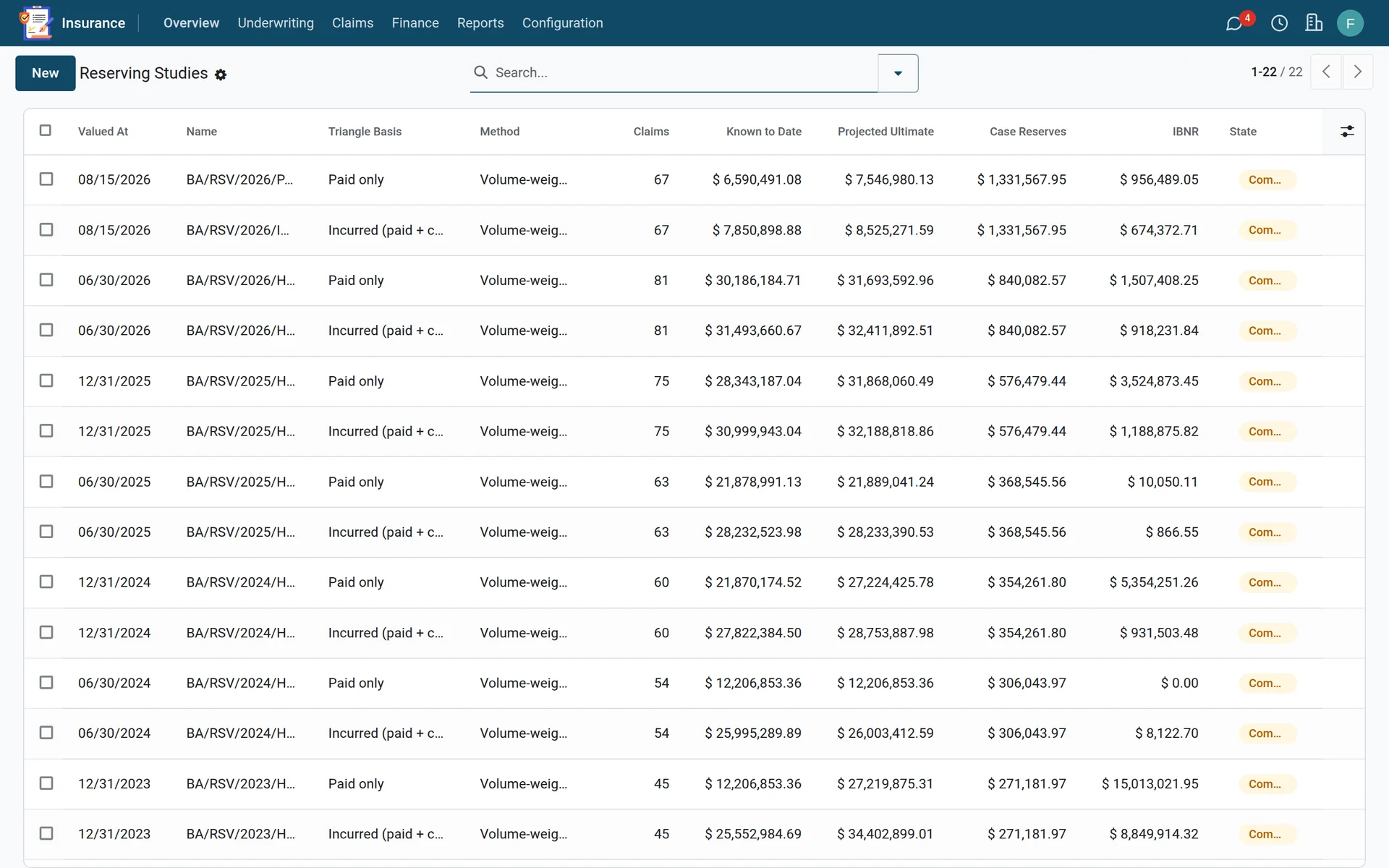
Every study with its valuation date, triangle basis, method, claim count, known to date, projected ultimate, case reserves and IBNR. Running both bases and comparing them is the standard check on case reserving.
IBNR by origin year
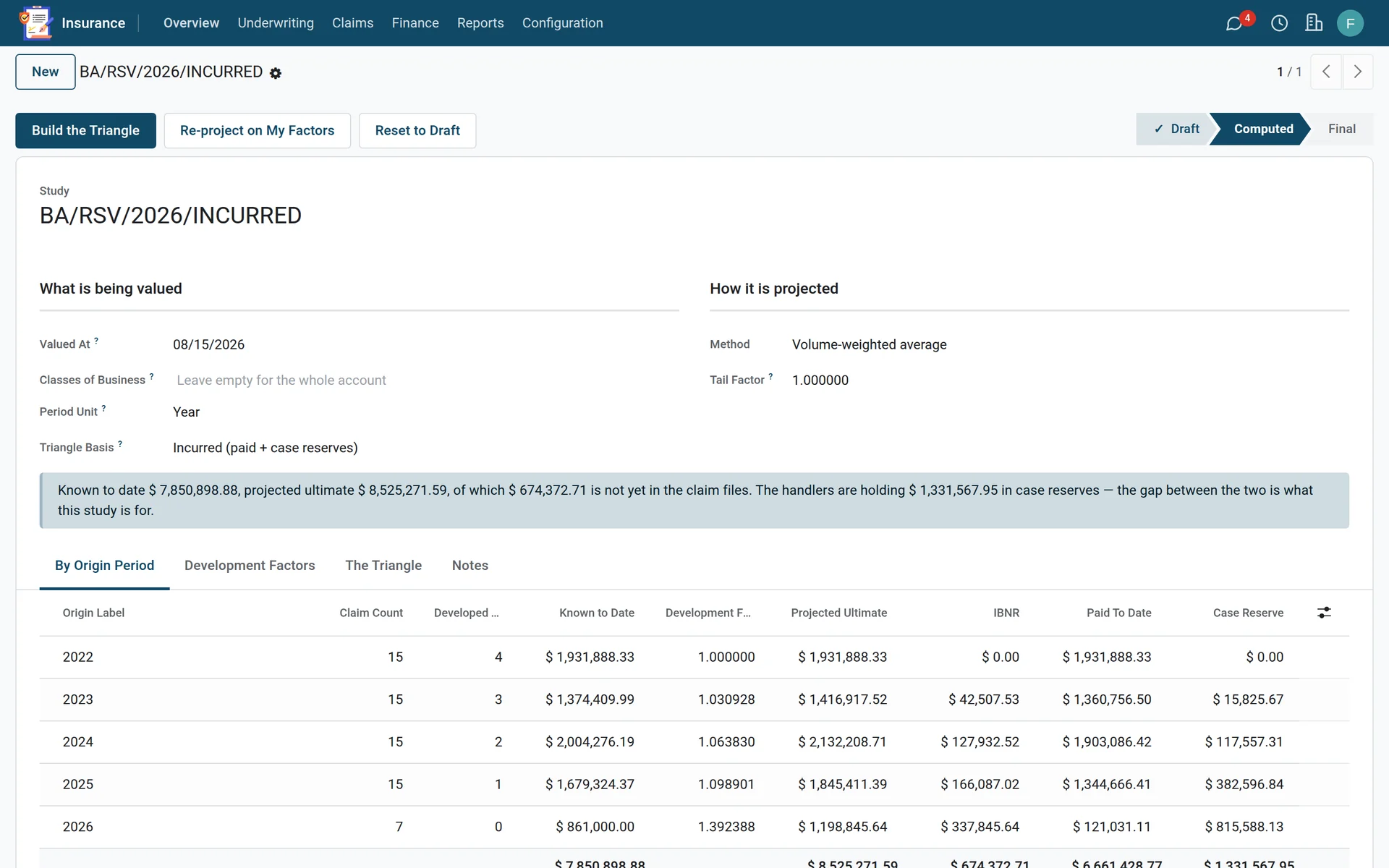
Known to date, the development factor, projected ultimate, IBNR, paid to date and case reserve for each origin year, with the whole answer written out in one sentence above it.
Factors you can overrule
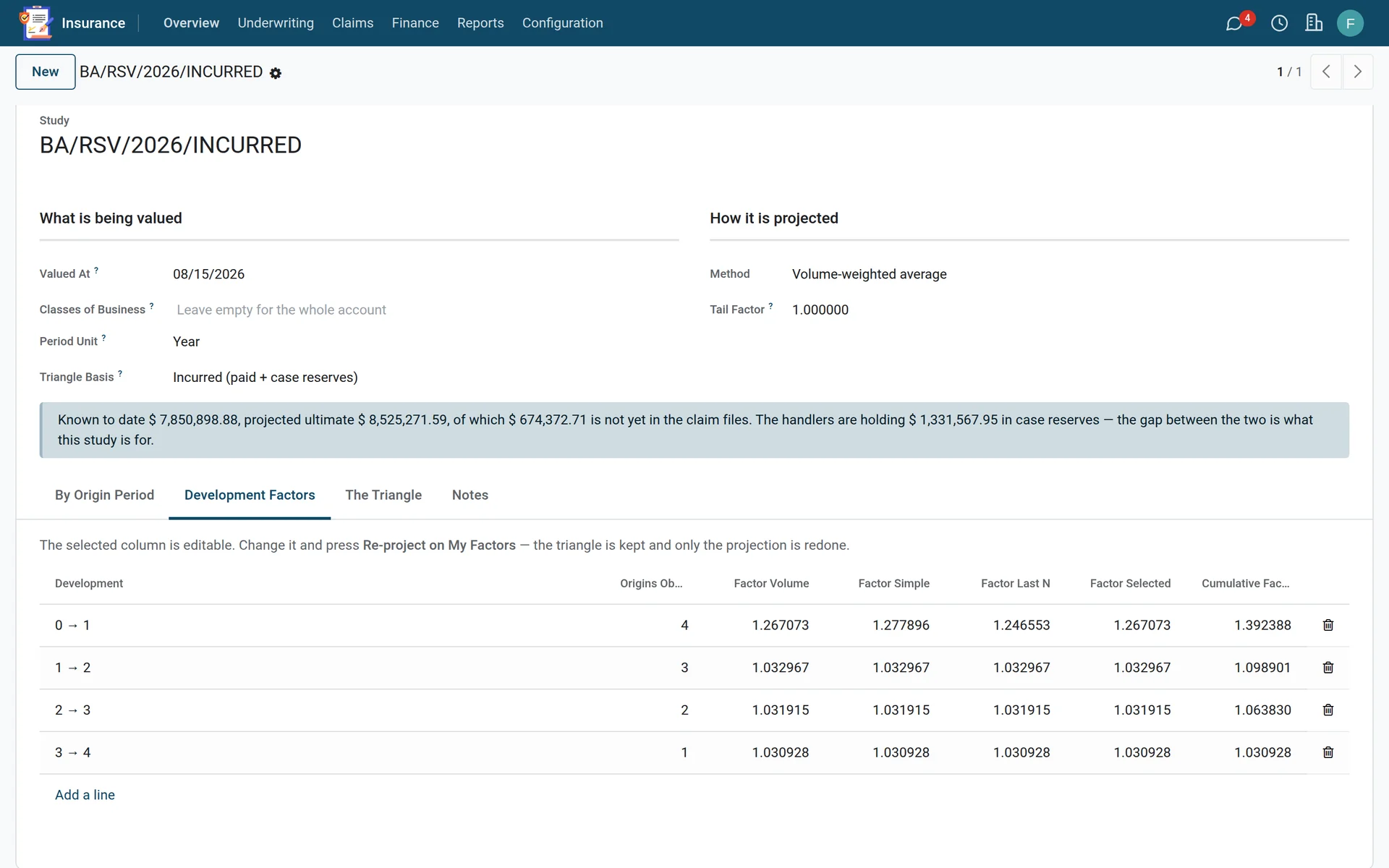
Volume-weighted, simple and last-N factors side by side, the selected factor that drives the projection, and the cumulative factor it chains to. Re-project on your own factors without rebuilding the triangle.
The triangle
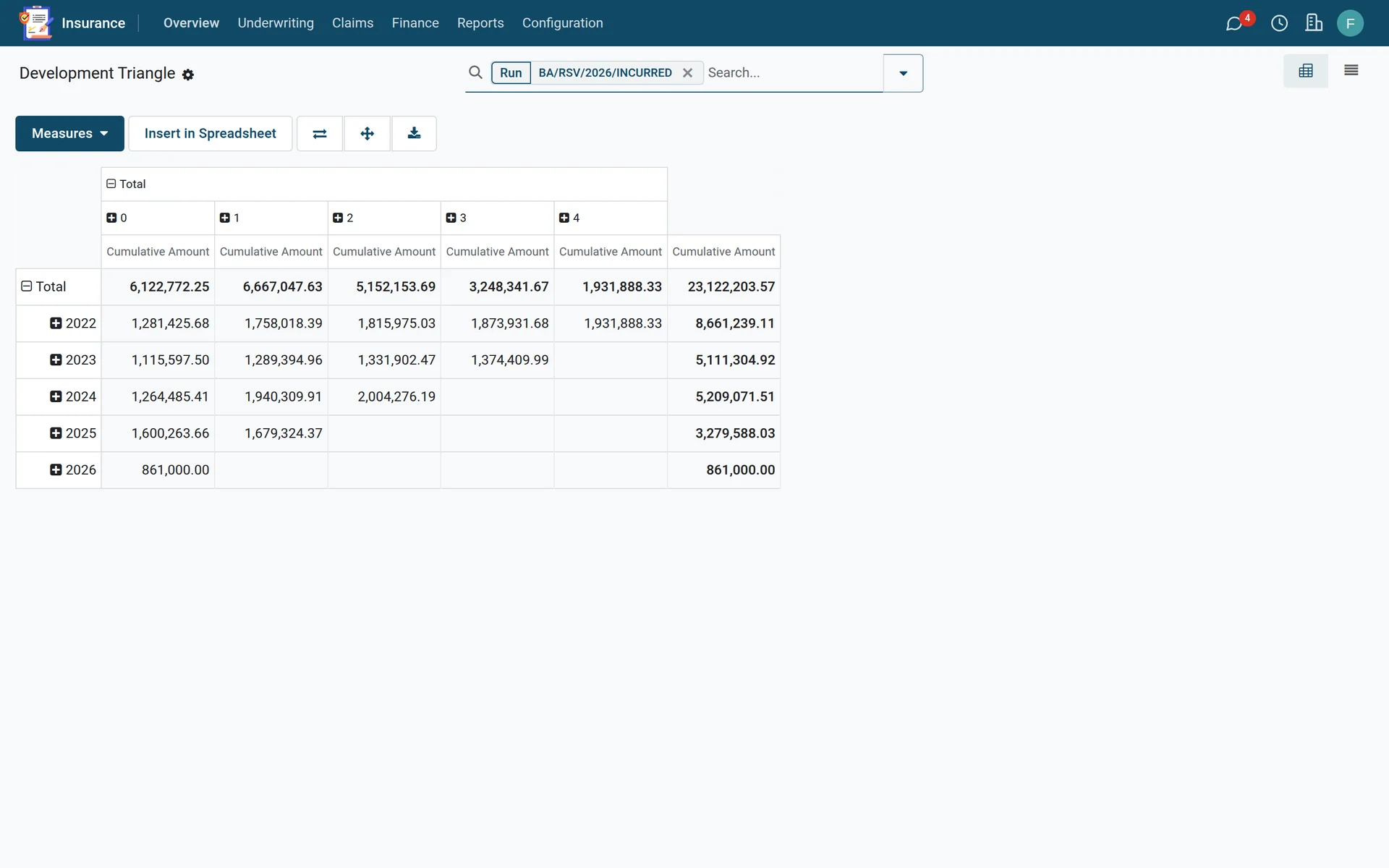
Each origin year valued at each development lag, cumulative, and one click from a pivot with origins down and development across.
A study, set up on one screen
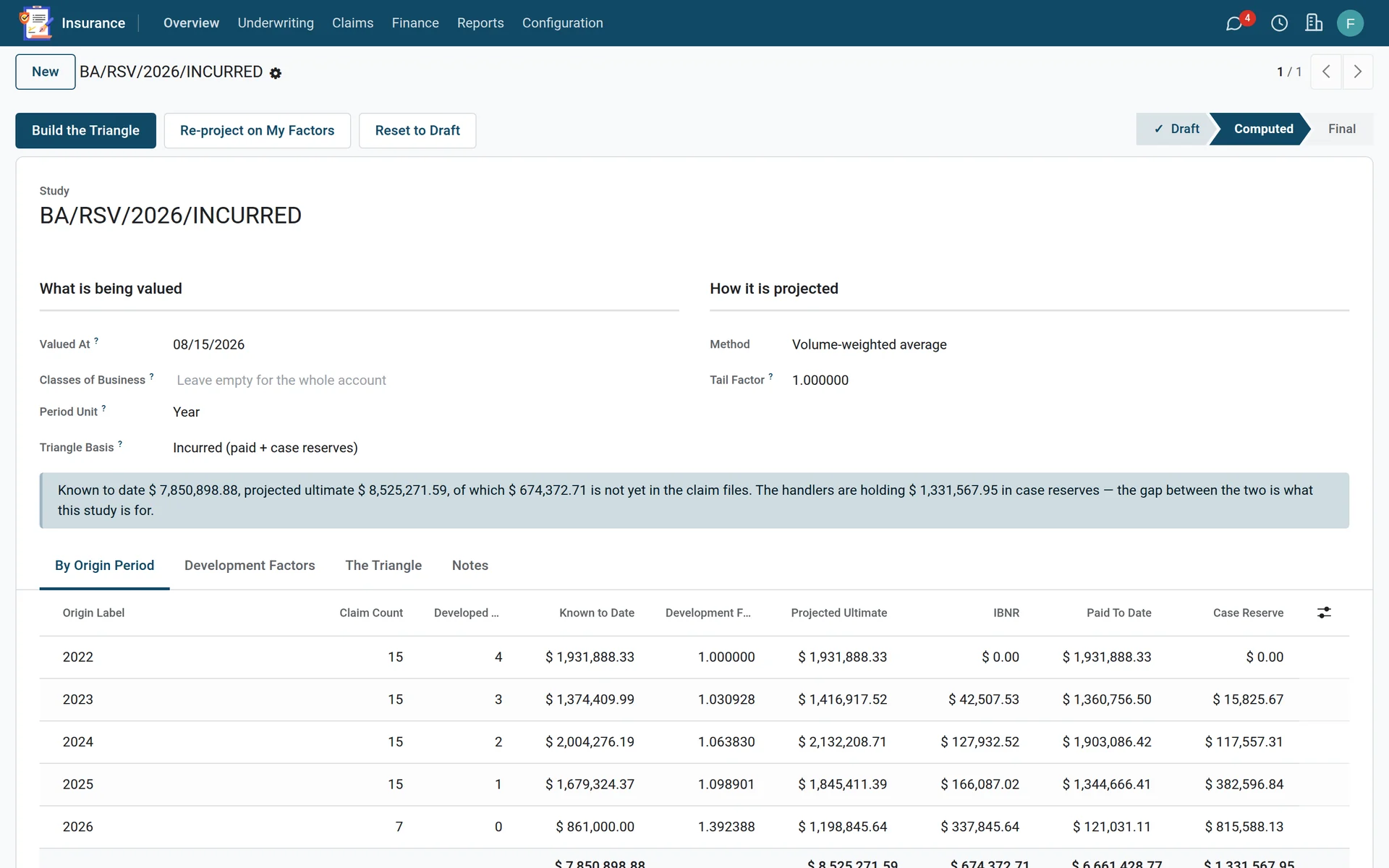
The valuation date, the classes, year or quarter, paid or incurred, the method and the tail factor, with the result written out in one sentence above the origin years.